

Am I Addicted to My Wearable Device?

There's a building tension. I can see the cold breath coming from my fellow runners as they execute the "about to run" jiggle on the start line.
A swift flick of the hips.
I'm lined up for my local 5km community parkrun and I mean business. Three, two, one...
Oh, hang on. I must sort my tracker. The same goes for the runner next to me.
The person in the line expresses impatience. I'm not moving until… done! Signal acquired, I'm off.
In the mele, it's hard to spot a person without a wearable on it. And this extends beyond us athletes who rely on them.
This is a thriving, massive market. Brands like Apple Watch lead the market, featuring an broad selection of different models to suit a range of lifestyles. According to how high tech the watch you select, prices can range from a hundred pounds to a significant investment.
"It drives me insane, I'm unable to stop checking."
"It provides solace… It's like a supporter guiding me."
"I wish it wouldn't say I've experienced a poor sleep."
A small sample of the reactions people have shared from like-minded smartwatch wearers when I inquire what they think of theirs.
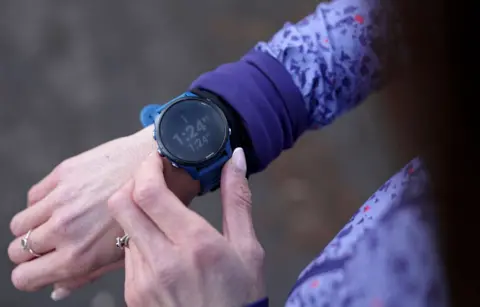
The Monitoring Conundrum
My thoughts on mine? Right now, frustrating. It's indicating I'm off pace, leading me to doubt whether the trees I'm passing under are blocking my GPS connection.
Countless individuals of us fasten these small gadgets onto our arms and use them 24/7, seemingly unconcerned with the fact they're perpetually recording us.
A distant memory are the days when we depended on them solely to give us an estimation of our pedometer reading. Currently, they can track our nightly rest, stress levels, oxygen saturation, our VO2 max.
It's difficult to find a health indicator they don't track.
But can they do what they say they do? And are the numbers we scrutinise a faithful picture of the truth? Do they improve our mental and physical wellbeing, or do the multitude of measurements and constant notifications just contribute to our daily stresses?

A Complicated Bond
"I become a a little preoccupied with mine," a wearer reveals.
While she loves how her device records her workouts, she finds some of its other capabilities "overwhelming" at times - a feeling that became apparent during a significant period.
Until she found out she could change its configuration, her smartwatch constantly alerted her she was failing to be energetic enough. Now, the watch frequently reports her she's had a poor sleep score.
"I have a six-month old, I don't need to be informed my sleep was poor," she says. "I know that only too well."
Why doesn't she just take it off?
"I could, theoretically, but I've got this love-hate relationship with it," she explains. "I love it for its exercise data, but I'm unsure whether the myriad other functions it can now do is perhaps too much for me."
The Technology Behind the Tracking
Each model of smartwatch has its own unique way of monitoring your bodily functions and processing your data, but the most use sensors on the reverse of the watch.
They typically project tiny, coloured LED lights onto your arm which can monitor pulsation, detecting your pulse rate. More advanced devices detect changes in the electrical current that flows through the skin to gauge your stress levels.
A Fine Balance
A professor says that overall for smartwatches, it's a "difficult line" - while the rapidly advancing tech could realistically save lives, "spotting abnormalities before we notice anything", it could also turn us watch wearers into the "anxious healthy".
He points out that newer wearables can carry out tests like heart rhythm analysis, which constantly monitor how healthy the heart is. They can notify if someone is experiencing atrial fibrillation (AF), where there is erratic impulses in the heart causing an irregular heartbeat.
This does not mean someone is about to have a cardiac event, but it can give an early warning they might be more vulnerable of a stroke in the years to come.
But how to understand these numbers is complicated. The expert fears that as further capabilities are introduced, people may not be able to fully contextualise their data.
"I'm not entirely convinced that the ability to monitor so many metrics is such a beneficial thing," he says.
A professor specialising in cardiology agrees. Research into the effect of wearable tech on a set of individuals with health issues suggested a noticeable percentage of those who were given devices to monitor their cardiac function experienced increased anxiety and were "more inclined to use doctor's time".
She observed a pattern with her patients - they noticed a worrying figure on their watch. They grew concerned. Their heart rate increased. They got more worried. They re-examined the data, and their heart rate increased again.
"If we see stats about ourselves that we can't properly interpret then, understandably, we are going to want to know more," the psychologist says. "We look, we re-check - it becomes a self-fulfilling prophecy."